Mobile Deposit Flexibility Expands Access to Progressive Jackpot Pools in Trial Settings
 Mobile trial environments allow users to test slot mechanics through free play modes before committing funds, and flexible deposit systems integrate directly with these trials to open pathways into progressive prize pools that accumulate across networks of players. Operators design these systems so that small or varied payment amounts trigger eligibility for jackpots without requiring large initial commitments, which expands the contributor base and accelerates pool growth. Data from industry tracking services shows that platforms offering multiple deposit methods, including instant bank transfers and digital wallets, record higher transition rates from trial sessions to real-money play in July 2026. Those transitions feed directly into progressive mechanics where each qualifying bet contributes a percentage to the shared pool, and flexible entry points reduce drop-off during the shift from demo to funded play.
Mechanics of Trial-to-Paid Transitions
Progressive jackpot pools operate on contributions from active bets, so trial environments serve as gateways when deposit flexibility removes friction points. Users complete a demo round, then select from tiered deposit amounts that align with their risk tolerance, and the system routes the funds into accounts eligible for pool participation within seconds. This process relies on backend integrations that verify compliance rules automatically while permitting varied payment sizes.
Observers note that networks using adaptive deposit thresholds see consistent month-over-month increases in active jackpot contributors. A single small deposit can qualify a player for multiple progressive tiers, and the same flexibility applies across devices so mobile sessions maintain continuity from trial to funded status. Research indicates that platforms with these features maintain steady pool increments even during periods of lower average bet sizes.
Payment Method Variety and Pool Growth
Deposit flexibility encompasses credit cards, e-wallets, prepaid vouchers, and bank transfers that process at different speeds and minimums. Each method feeds into the same progressive system, yet the variety accommodates regional preferences and regulatory limits on transaction values. In July 2026 reports from North American operators, jurisdictions permitting broader payment options documented larger average pool sizes compared to regions with restricted methods.
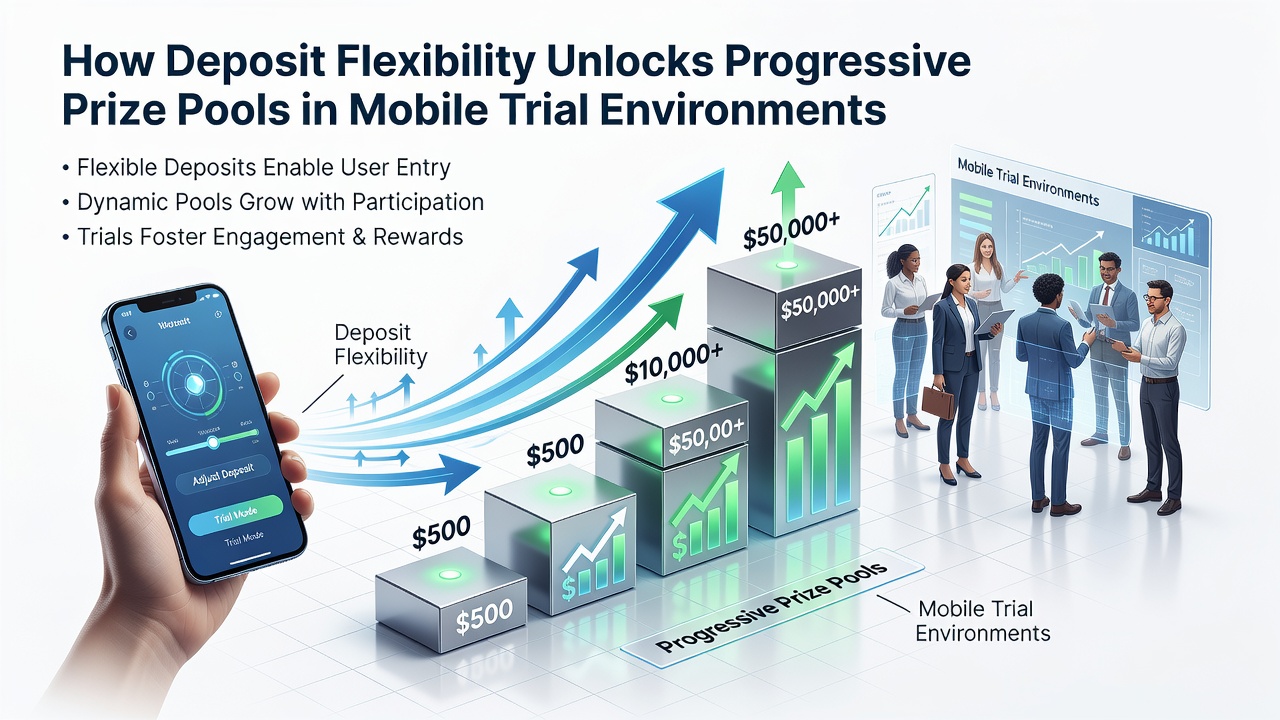
Those who study transaction data find that instant options, such as digital wallets, produce faster pool contributions because funds clear immediately after trial completion. Slower methods still add value through volume, since players who prefer scheduled transfers often return repeatedly. The combined effect creates compounding growth where pool totals reflect both the number of participants and the frequency of their contributions.
Regional Regulatory Influences on Deposit Structures
European regulators outside the UK have examined how deposit flexibility interacts with consumer protection standards, and frameworks in several member states now require clear disclosure of jackpot eligibility at the point of deposit. Similar reviews appear in Australian state licensing documents, where operators must demonstrate that trial environments transition smoothly without misleading players about pool access. These rules encourage systems that display real-time pool values alongside deposit choices, which in turn supports informed participation.
Academic studies from gaming research centers at universities in the United States and Canada have modeled the relationship between minimum deposit thresholds and jackpot hit frequencies. Their simulations indicate that lowering entry barriers through flexible amounts increases the total number of bets placed on progressive games, thereby raising the statistical likelihood of payouts without altering the underlying random number generation.
Platform Implementation Patterns
Developers integrate deposit flexibility through modular APIs that connect trial modes to real-money ledgers. Players finish a free session, receive prompts listing available methods with associated minimums, and complete funding before the next spin qualifies for the pool. Case examples from Canadian operators illustrate how multi-currency support further expands access, allowing international users to contribute in their local denominations while the pool accumulates in a base currency.
Industry organizations such as the American Gaming Association have published aggregated figures showing that mobile-first platforms with flexible deposits sustain higher retention into jackpot-linked games. Those metrics align with findings from the Victorian Responsible Gambling Foundation in Australia, where trial environments paired with varied payment options correlate with broader participation across demographic groups.
Conclusion
Deposit flexibility in mobile trial environments functions as a structural enabler for progressive prize pools by converting demo activity into funded contributions at scale. Regulatory frameworks in multiple regions continue to shape how these systems operate, while transaction data from July 2026 confirms measurable impacts on pool sizes and contributor numbers. The interplay between varied payment methods, instant processing, and trial-to-paid pathways maintains the growth trajectory of shared jackpots across networks.